If you are a junior golfer dreaming of playing Division I golf — or a parent trying to understand what coaches actually want — you have probably heard some version of the same checklist: low handicap, strong grades, good character. And while none of that is wrong, it is nowhere near the full picture.
Having played D1 golf at the University of Delaware and captained the team, I have seen college golf recruiting from the inside. And now, building PARfect Performance, I work with college programs on how they use data to evaluate both recruits and their own players. What I have learned is that the process is far more nuanced — and far more data-driven — than most junior golfers realize.
Here is what D1 programs are really looking for.
1. Scoring Average in Context
Yes, coaches look at your scores. But raw numbers mean very little without context. A 74 on a flat, short course in calm conditions tells a very different story than a 74 on a ranked college track in wind and rough.
What coaches actually want to understand is how you score relative to field quality and course difficulty. That is why strong recruits do not just submit scorecards — they submit tournament results where coaches can cross-reference the field, the venue, and the conditions.
If you are competing in junior golf, make sure you are playing AJGA, JNGA, or strong state-level events where that context is available. Playing up in age groups also signals competitive willingness, which matters in college golf recruiting.
2. Stats, Not Just Scores
This is where things have changed significantly in recent years. More and more D1 golf programs — especially at the mid-major and upper levels — are now tracking strokes gained data on their own rosters. That means some of them are also starting to ask recruits smarter questions: not just “what do you shoot?” but “where do you lose shots?”
Programs that use golf analytics understand that a player who shoots 74 but leaks strokes on approach shots has a very different profile than a player who shoots 74 because of an elite short game covering up weak ball-striking. Both might get recruited — but they fill different roles on a team and require very different development plans.
If you are a recruit who already knows your strokes gained numbers — who can walk into a visit and say “my biggest gap versus D1 benchmarks is approach shots inside 150 yards, and here is how I have been working on it” — you will stand out immediately. Not because coaches expect that level of self-awareness, but precisely because almost no junior golfer shows it.
3. Wedge Game
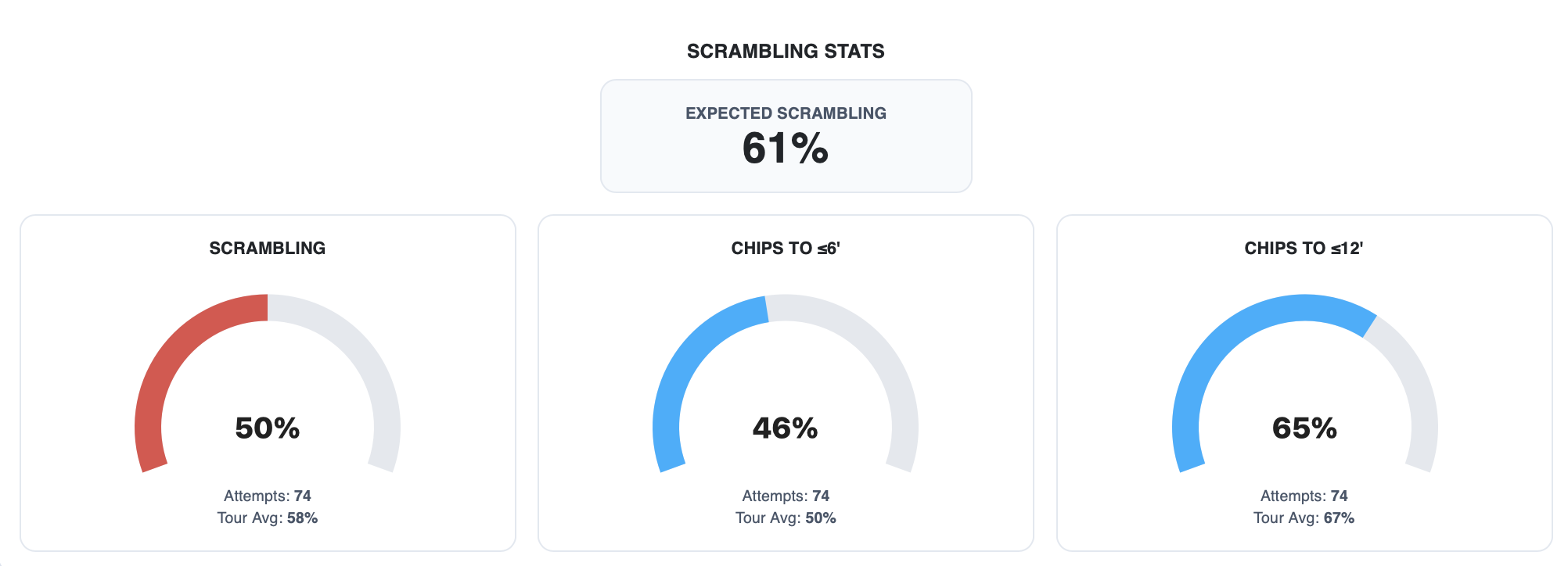
At the D1 golf level, the wedge game separates good recruits from great ones. Coaches know that as courses get harder and fields get stronger, the ability to convert scoring opportunities from inside 100 yards becomes one of the clearest predictors of collegiate success.
A junior golfer with a sharp wedge game gives a program immediate value. Strong proximity numbers from wedge distances, high conversion rates from 50 yards and in, and the ability to flight the ball with precision under pressure — these are things that show up in strokes gained data and stand out to any coach who is paying attention.
If your wedge game is a genuine strength, make sure it is visible in the data you bring into recruiting conversations. If it is a weakness, it is one of the highest-leverage areas to develop before you reach the college golf level.
4. Tee Shots and Distance
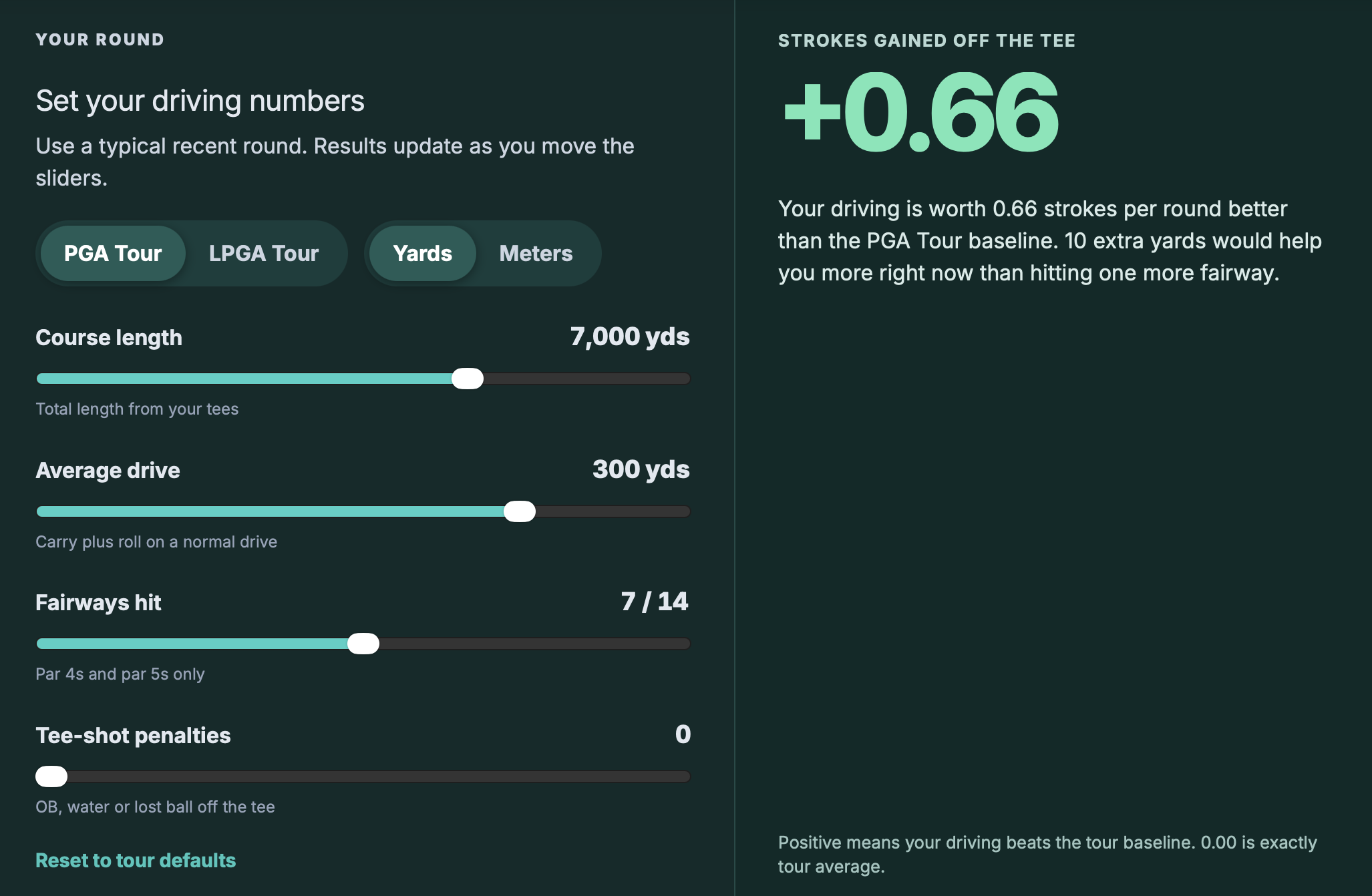
Distance matters in D1 golf — more than it used to. As college courses have stretched and the athletic standard has risen, programs are increasingly looking for recruits who can move the ball off the tee. A junior golfer who drives it 280+ yards has real strategic advantages at the collegiate level that shorter hitters simply do not.
But distance alone is not what coaches are evaluating. What they want is distance with enough control to be a weapon rather than a liability. A player who bombs it 300 yards and misses half the fairways is not easier to manage — they are harder. What stands out is a tee game that combines length with a predictable enough pattern that the player can make smart decisions and execute under pressure.
Strokes gained: off the tee is one of the clearest areas where golf analytics separates recruits who help a team score from those who merely hit impressive shots on the range.
5. International Tournament Experience
Playing internationally is one of the strongest signals a junior golfer can send in the college golf recruiting process. It demonstrates competitive ambition, adaptability, and a level of exposure to different courses, conditions, and fields that domestic-only players simply have not had.
Coaches understand that a junior golfer who has competed in European junior events, national team competitions, or international amateur tournaments has been tested in ways that sharpen both skill and mental toughness. Different grasses, different wind patterns, different course designs — these experiences build a more complete player, and coaches know it.
If you have international results on your record, highlight them prominently. If you have represented a national team at any level, that context carries real weight in D1 golf recruiting.
6. Academic Profile
This one is not glamorous but it is non-negotiable. Coaches cannot recruit players who will not get admitted, and they cannot keep players on scholarship who are academically at risk.
Beyond admission requirements, academic profile affects roster flexibility. Coaches cannot manage a team if they are constantly navigating eligibility issues. Players who are strong academically give programs more freedom — and that freedom has real value in building a D1 golf roster.
The practical threshold varies by institution, but for most D1 programs you should be targeting a GPA above 3.0 and standardized test scores in range for the school’s general student body. If your academic profile is strong, lead with it.
7. Coachability
Every coach will tell you coachability matters. But what does it actually mean?
It comes down to this: a coach’s job is to develop players over four years. If a recruit arrives defensive about weaknesses, dismissive of instruction, or convinced they already have everything figured out — that is a red flag regardless of the scores. The recruits who thrive in D1 golf are the ones who come in knowing what they want to improve, hungry for the process, and open to being challenged.
Coachability also shows up in how you use data. A junior golfer who tracks their strokes gained, identifies gaps honestly, and brings those insights into conversations with coaches is signaling something powerful: that they are already in the habit of self-diagnosis and intentional improvement. That is exactly the kind of player a coach can develop.
8. Character and Competitive Resilience
Coaches watch everything during a campus visit — how you talk about your misses, how you interact with current players, how you carry yourself after a bad hole during a recruitment round. They are not looking for perfection. They are looking for maturity and competitive resilience.
Junior golf at the D1 level demands the ability to compete when things are not going your way. Players who visibly unravel under pressure, blame conditions, or disengage from the team environment after a poor round are difficult to manage over a full season. What coaches want is someone who competes hard, processes adversity well, and brings energy to the team rather than draining it.
9. Fit Within the Roster
This one is often underestimated by junior golfers and families going through the college golf recruiting process. D1 golf is a team sport, even though it is played individually. Coaches are building rosters, not just collecting talent.
A 72-average player who competes in exactly the same role as three returning players might be less attractive than a 74-average player who fills a genuine gap. Golf analytics helps programs understand those gaps clearly — which is one more reason that recruits who arrive with strokes gained data give coaches something concrete to evaluate fit against.
When you visit, pay attention to the team dynamic. Ask current players what the culture is like. Coaches are evaluating you — but you should be evaluating the program just as carefully.
How to Stand Out
If I could give one piece of advice to a junior golfer entering the D1 golf recruiting process, it is this: know your game better than anyone else in the room.
Most recruits show up with a scorecard and a hope. The ones who stand out come in with self-awareness — they know where they are strong, where the strokes gained gaps are, and what they are doing about it. That clarity signals maturity, coachability, and competitive seriousness all at once.
That is exactly what PARfect Performance is built for. When you are tracking your golf analytics data over a full season — across putting, approach, tee shots, and around the green — you develop a level of insight into your own game that almost no other junior golfer has. And in a college golf recruiting conversation, that insight is a genuine differentiator.
If you want to understand how dispersion tracking can sharpen your tee game before you get to that recruiting conversation, have a look at our previous post: Tracking Your Tee Shot Dispersion: The Data Your Driving Range Session Is Missing